Roasted Vegetable Grain Bowls
A flexible grain bowl method with roasted vegetables, beans, greens, and a bright dressing.
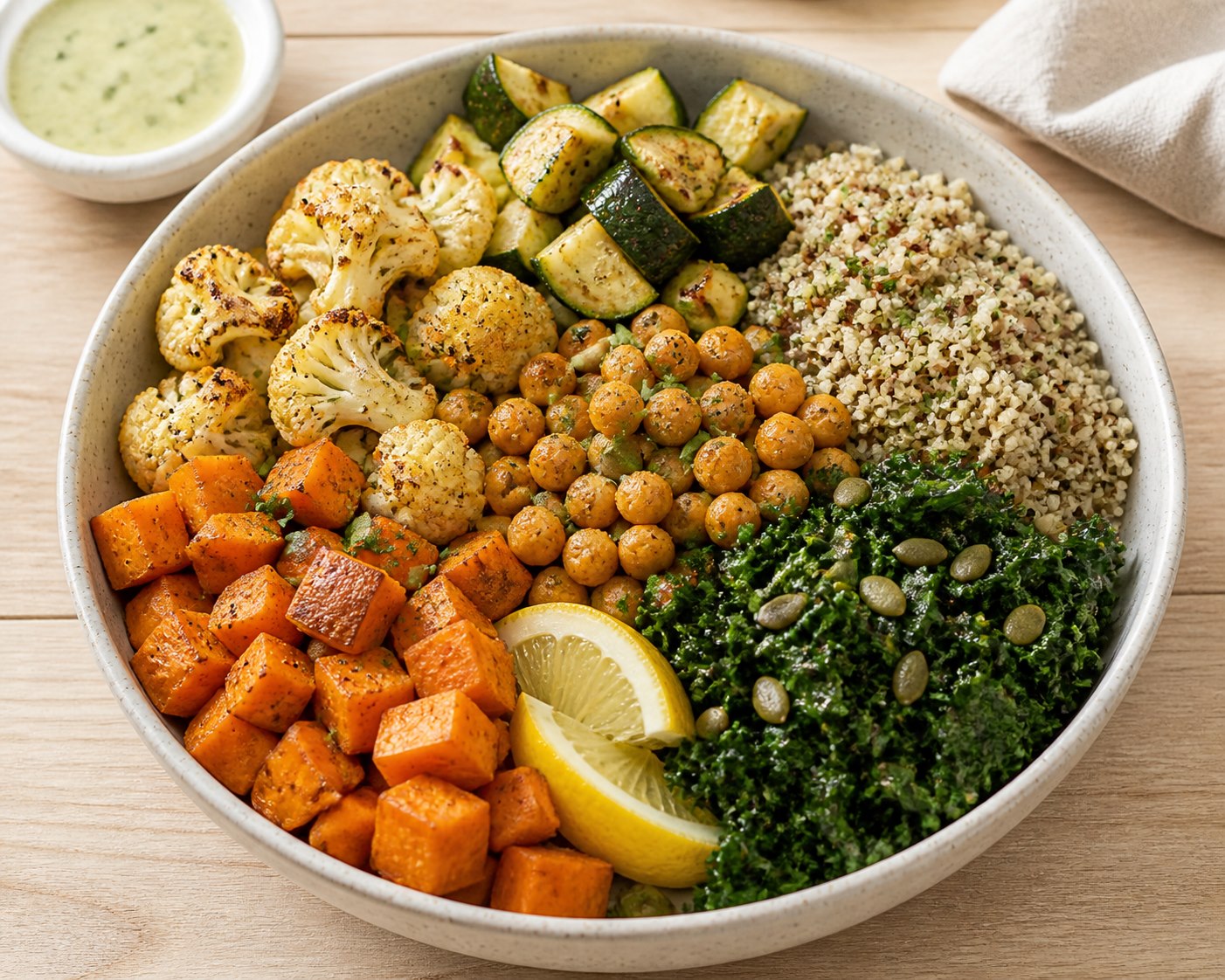
Roasted Vegetable Grain Bowls are built for practical home cooking. The goal is a bowl that has enough protein, enough texture, and enough sauce to feel complete while still being simple to repeat during a busy week.
Recipe card
Use this card as the practical working version before reading the deeper prep notes.
Ingredients
- 2 cups cooked quinoa
- 2 cups roasted sweet potatoes and cauliflower
- 1 cup roasted zucchini
- 1 can chickpeas
- 2 cups chopped kale
- 2 tablespoons pumpkin seeds
- 1/2 cup lemon herb dressing
Step-by-step plan
- Cut vegetables into similar-size pieces so they roast at the same pace.
- Roast sweet potatoes and cauliflower at 425°F for 25 to 30 minutes, flipping once. They are ready when the edges brown and a fork slides in without force.
- Add zucchini later if needed, because it softens faster than sweet potatoes and cauliflower.
- Season chickpeas with olive oil, lemon zest, salt, and pepper, then add them to the bowl after roasting.
- Massage kale with a little lemon juice for 30 seconds, then layer quinoa, vegetables, chickpeas, kale, pumpkin seeds, and dressing.
For a stronger prep routine, pair this guide with Mediterranean Chickpea Grain Bowls, Quinoa Black Bean Bowls, Five Simple Sauces That Make Meal Prep Bowls Better. These related guides help with sauce choice, storage, and planning the next bowl without repeating the same meal.
The bowl formula
Start with a base that fits the recipe: rice, quinoa, pasta, noodles, potatoes, or crisp greens. Add one clear protein, two vegetables, and one sauce. This structure keeps the bowl focused and prevents it from becoming a random mix of leftovers.
The best bowls are specific. They do not need twenty ingredients. They need contrast: warm and cool, crisp and soft, rich and acidic.
Prep decisions
Before cooking, decide whether the bowl will be served warm, cold, or mixed. Warm bowls can hold roasted vegetables and rice together. Cold bowls need sturdy greens, beans, pasta, or grains that do not collapse in the refrigerator.
Keep sauces and crunchy toppings separate. This single habit improves nearly every meal prep bowl.
How to adapt it
Use the same flavor direction when swapping ingredients. If the bowl uses lime and cumin, choose beans, corn, cabbage, chicken, or avocado. If it uses lemon and herbs, choose chickpeas, cucumber, tomato, feta, fish, or chicken.
A useful recipe should make substitutions easier, not harder. That is why every Fooood article includes storage notes, sauce ideas, and a short FAQ.
Ingredient notes and swaps
Use the recipe title as the main promise, then keep the rest of the bowl flexible. A good swap should keep the same job in the bowl: a grain can be replaced with another grain, a creamy sauce can be replaced with another creamy sauce, and a crisp vegetable should be replaced with something that still brings crunch.
For budget cooking, choose ingredients that can appear in more than one meal during the week. Rice, beans, cabbage, cucumbers, eggs, canned tuna, chicken, chickpeas, sweet potatoes, and yogurt sauces are useful because they can move across several bowl styles without making every meal taste the same. For general bowl balance, the Harvard T.H. Chan School of Public Health Healthy Eating Plate is a useful background reference because it emphasizes vegetables, whole grains, and healthy protein as everyday meal-building components.
Assembly order
Start with the base, add the protein, then add vegetables in groups rather than scattering everything randomly. This makes the bowl easier to eat and easier to photograph. Finish with herbs, seeds, citrus, or sauce only when the bowl is ready to serve.
If packing for later, think in temperature zones. Warm items such as rice, roasted vegetables, chicken, or beans can share one container. Crisp greens, cucumber, herbs, avocado, and dressings should stay separate until serving. This is the simplest way to keep a bowl fresh without special equipment.
Storage and food safety
Cool cooked ingredients before closing containers and refrigerate them promptly. The USDA Food Safety and Inspection Service gives a general 3 to 4 day refrigerator window for leftovers, which is why Fooood keeps most cooked bowl components within that conservative range. Seafood and delicate salad bowls are usually better earlier in the week.
When reheating, warm only the ingredients that need heat, then add the cold toppings afterward. This keeps lettuce from wilting, cucumbers from softening, and sauces from separating. For item-specific storage timing, the FoodSafety.gov cold food storage chart is a helpful reference. If something smells off, looks unusual, or has been stored too long, discard it.
How to make the bowl feel less repetitive
The easiest way to keep a weekly bowl routine from feeling repetitive is to change one major element at a time. Keep the base and protein the same, then change the sauce. Keep the sauce and base the same, then change the vegetables. This method saves time because the cooking process stays familiar, but the flavor still feels new.
For example, rice and chicken can become a burrito bowl with salsa, a Greek bowl with lemon yogurt sauce, or a sesame bowl with cucumber and ginger dressing. The ingredients do not need to be expensive or complicated. They only need to point in the same flavor direction.
What to prep on Sunday
A practical Sunday prep session should focus on components, not fully mixed bowls. Cook one grain, prepare one protein, wash and dry sturdy vegetables, and make one or two sauces. Leave delicate toppings for the day you plan to eat the bowl. This keeps the work manageable and avoids the common problem of opening the refrigerator to find five soggy lunches.
If time is limited, prep the ingredient that takes the longest and buy shortcuts for the rest. Cook rice but use canned beans. Roast vegetables but use rotisserie chicken. Make a fresh sauce but use prewashed greens. A realistic plan is more useful than a perfect plan that never happens.
Serving rhythm for the week
Use the freshest bowls early in the week and the sturdier bowls later. Seafood, tender greens, avocado, and tomato-heavy bowls are best first. Bean bowls, rice bowls, roasted vegetable bowls, and freezer-friendly bases can wait a little longer. This rhythm helps the food taste better and reduces waste without requiring a complicated meal calendar.
When a bowl starts to feel plain, add one finishing element instead of rebuilding the whole meal. A squeeze of citrus, a spoonful of sauce, toasted seeds, chopped herbs, pickled onions, or a crisp topping can make a prepared bowl feel freshly assembled.
Allergy and label reminder
Many bowl toppings and sauces can contain common allergens such as milk, egg, fish, shellfish, tree nuts, peanuts, wheat, soybeans, or sesame. The U.S. Food and Drug Administration food allergy guidance is a useful reference for readers who need to check labels or avoid cross-contact. Always adjust the bowl for your own household's allergy needs.
References
These sources are used as general background for food safety, storage, allergens, and balanced bowl-building. They are not used as medical advice.
- USDA Food Safety and Inspection Service: Leftovers and Food Safety
- FoodSafety.gov: Cold Food Storage Chart
- U.S. Food and Drug Administration: Food Allergies, What You Need to Know
- Harvard T.H. Chan School of Public Health: The Healthy Eating Plate
Practical tips
- Choose one sauce before choosing extra toppings.
- Do not pack hot food directly with crisp greens.
- Use leftovers intentionally rather than mixing unrelated flavors.
FAQ
Can I prepare this ahead?
Yes. Store the base and protein together, then keep sauce and delicate toppings separate.
What makes it filling?
A filling bowl usually needs a protein, a grain or bean, vegetables, and a sauce with enough acidity.
Friendly note
This article is for general home cooking inspiration. Use your own judgment for allergies, food safety needs, and dietary restrictions.